
Himanshu S. Amin
Managing Partner
Cleveland
BS Electrical Engineering · USPTO reg.

Robotics
Much of what is new in a robot is in how it is controlled: the grasp it chooses, the disturbance it detects, the command it takes from a remote operator, the manipulation it has learned. Claimed as a computation, that invention reads to an examiner as information processing; claimed as a controller that simply performs a function, it can be read down to whatever algorithm the specification happens to disclose. The claims that hold say how the computation changes what the actuators do, or how it improves the controller itself.
The work here is the robot itself: apparatus and methods for controlling a manipulator and determining the disturbances acting on it, teleoperation systems and the assistance they give a remote operator, robots that learn a manipulation rather than being programmed with it, grippers and fingertips designed around the way an object is grasped, digital twins that simulate the robot's own motion, and safety sensing around a working robot. Beneath the control sits the hardware it drives: arm structures, soft actuators, and fastening and handling mechanisms. The area holds what the patent system itself classifies as manipulators and their control, rather than every product that happens to contain a motor.
Robotics shares its borders with other areas, and the line follows what the claim is about. Surgical robotics is handled in Medical Devices, where the regulatory path shapes the claims. Where the robot is one station in a plant and the invention is the control of the process around it, the work belongs to Industrial Automation; where the invention is the architecture of the learning model rather than what the robot does with what it has learned, it belongs to AI & Machine Learning. The same disclosure often supports claims on both sides of a line — a learned manipulation can be claimed as the training and as the robot's execution of it, and the two can be practiced by different parties — so the claim set is written with each of them in view.
A robot control invention is, at bottom, a computation: an operator's command relayed, a disturbance detected, a grasp selected, a manipulation learned, a simulated state updated. A claim that stops once the computation is finished is a claim to processing information, and an examiner applying Alice under Section 101 can treat it that way however physical the specification sounds. A claim is on firmer ground when the result changes the operation of the machine — the joints commanded, the grip closed, the motion slowed or stopped — so that what is claimed is the operation of a robot rather than a calculation about one.
The actuation step has to do real work. A closing clause that says only "and control the robot based on the result" is the kind of token step an examiner discounts as applying the idea on a generic machine; a clause that says how the result changes the motion is what can integrate it into a practical application. Learned manipulation and digital twins raise the same question more sharply, because each reads as a model or a simulation until the claim says what the physical robot does differently because of it.
Robot control claims are usually written as apparatus built from functional components: an acquisition unit, a determination unit, a control unit that commands the actuators. A term like "unit" usually names no structure on its own, and since Williamson a limitation of that kind can be construed as means-plus-function under Section 112(f) even though the word "means" never appears. Examiners routinely identify these limitations in the Office action, and once a limitation is construed that way it covers only the structure the specification discloses for performing the function, and its equivalents — which, for a function carried out by a processor, means an algorithm.
That makes the specification decisive. If it discloses no algorithm — a box in a block diagram labeled "determination unit" and a sentence saying what it determines — the claim is indefinite. If it discloses a single control law, the claim may shrink to that control law and its equivalents. The drafting answer is to describe the control logic itself, with its alternatives, in enough detail that the functional claim still reaches the designs a competitor would build, and to carry method and storage-medium claims alongside it that recite steps rather than units and do not depend on how the apparatus claim is construed.
Evidence
Team
Managing Partner
Cleveland
BS Electrical Engineering · USPTO reg.
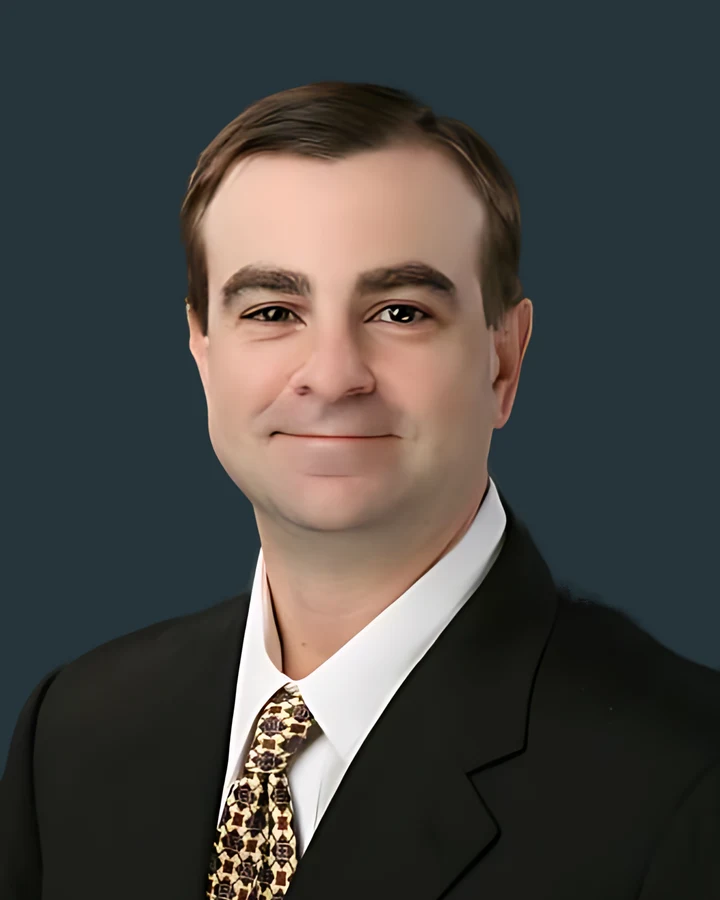
Managing Partner
Seattle
BS Electrical Engineering · USPTO reg.

Partner
Ft. Lauderdale
BS Molecular and Micro Biology · USPTO reg.
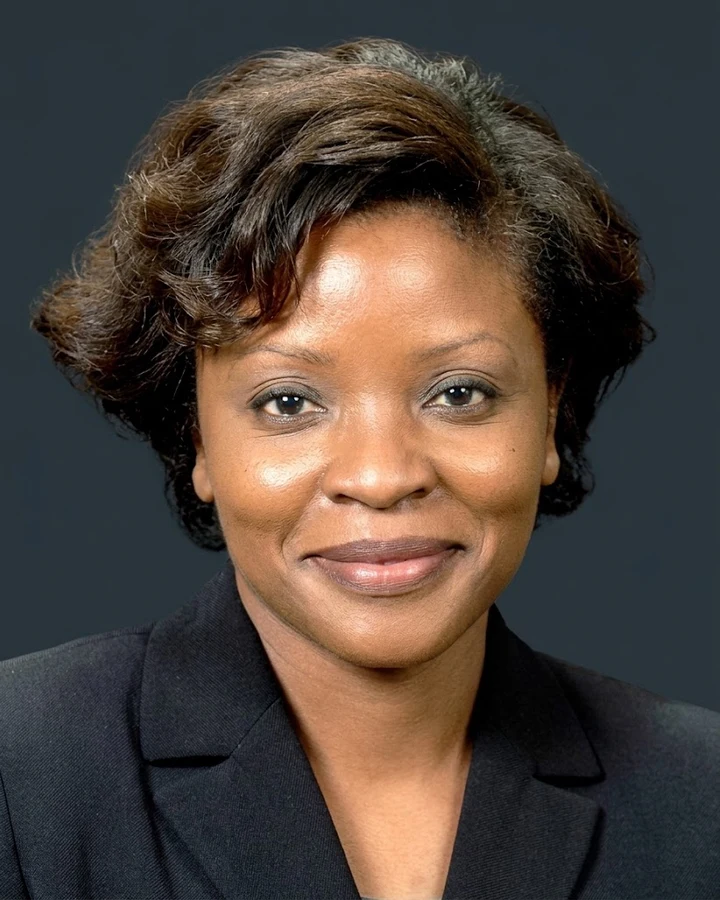
Partner
Atlanta
BS Electrical Engineering · USPTO reg.

Associate
Atlanta

Associate
Cleveland
BS Biomedical Engineering · USPTO reg.

Associate
Cleveland
BS Industrial & Systems Engineering · USPTO reg.

Patent Agent
Ft. Lauderdale
BS Computer Software/Hardware Engineering · USPTO reg.

Patent Agent
New York
BS Mathematics and Computer Science

Patent Agent
Columbus
BS Electrical Engineering · USPTO reg.